Intro- So, this is my first book review, and any comments or feedback would be much appreciated. I have always had a deep appreciation for GLBTQ (for the out-of-the-know, that's Gay, Lesbian, Bisexual, Transgendered and/or questioning) books and cinema. I believe there really can't be enough of this resource for the GLBTQ community, especially youths who aren't yet sure where or how they fit in. I hope that Christians and gays can unite someday and throw away the silly prejudices one has about the other. It's only then that we can make our way towards a better GLBTQ future.
The book- "Parrotfish" is a funny and tender light read that nonetheless has content that will provide serious discussion. It asks the question, between the lines of straight and gay, male and female, how does what the youth hem or herself wants fit in? Why is gender such a big deal? Grady Katz-McNair is by all accounts a very ordinary boy, except he's not.
You see, Grady is Angela, a biological female, and vice versa. Angela/Grady is a smart, funny, and razor-sharp transgendered teenager. 'His' family is shocked when he comes out as Trans, and why shouldn't they be? It's a big change. But Grady doesn't think so. This is who he's always been, only now he has gone the whole nine yards- cutting his hair, binding his breasts, and swapping 'Angela' for a more masculine name.
Grady requests acceptance- and reactions at home and school run the gamut, from horrified and horrifying to accepting to somewhere in between. Grady finds unlikely allies in Sebastian Shipley, the High School geek, and Kita, a fierce beauty and Grady's first love interest, while growing further and further away from his old friend Eve, who has starting hanging out with some very nasty girls.
An interesting technique that is used in this book is the ironic, imagined conversations Grady comes up with. In these talks, people say what they really think, and everything is out in the open. Many writers would write over-the-top, unbelievable dialogue just to be funny, but author Ellen Wittlinger finds away around this and also, in doing so, adds humor and credibility to Grady's character.
I wasn't sure about some of the side characters. Sebastian seemed like a little too much of a super-nerd who always runs to Grady's defense, is blisteringly intelligent, and doesn't care what anybody thinks. Kita was a little aggressive. A good example of her aggression is when she goes ballistic because there was a drag comedy routine at high school and believes that Grady's rights are being infringed upon. I mean, burlesque acts involving cross-dressers have been going on for years, and so what? They're just for fun.
My dad did a Miss Emergency Pageant in full drag, but not to be offensive to transsexuals. You can do it in a way that is offensive and homophobic. But that's not the only option. So, I think Kita overreacted. And she and Sebastian are somewhat one-dimensional. But they don't ruin a very entertaining book.
"Parrotfish" is a LIGHT read, emphasis on light, so don't expect literary gold. But you can still learn from it. Grady is a hilarious and lovable character. He's extremely intelligent and sarcastic, which just makes him more lovable. But he just wants to be himself yet still receive his family's approval. I also loved the character of Miss Unger. She doesn't turn out to be how I first thought she would at all.
This book is thematically similar to "Luna" by Julie Anne Peters, and has a blurb by Peters on the back. "Luna" is a little more literary, but I like them both in their own way. "Parrotfish" is a lot of fun yet sensitive to its subject matter. I also think it would make a great movie if the they cast it right.
None of the A-list young Hollywood starlets would pass as a boy like Grady does, so I think they'd have to cast an unknown, and also pick someone who actually looks about sixteen (okay, I think I have a pet peeve with alternately hulking and buxom thirty-year-old actors playing fifteen- and sixteen-year-olds.) I'd recommend this book to the open-minded and those who remember being a teenager.
Rating-
8.0/10
Showing posts with label Gender Issues. Show all posts
Monday, February 3, 2014
Saturday, February 9, 2013
Parents, Raise Your Children To Question Authority: Discussion of Compliance & Other Chit-Chat
We've been bad bloggers lately. Between continuing to plug along through Stephen King's 11/22/63, which I'm loving, watching old episodes of American Horror Story and The Wire, and ... y'know ... working and parenting and stuff, there hasn't been time to finish books, watch new movies, or blog.
Sarah and I are still digging The Wire. We do love complex, morally ambiguous characters, and there is a load of them here.
She and I watch American Horror Story with John on nights he's off work. It's an interesting pastiche of ghost stories and horror films, with shades of The Shining and Rosemary's Baby, that is if Rosemary decided to forgo chowing down on a little raw meat in favor of a nice bloody raw brain. It's definitely beyond by fucked-upness threshold, especially with the recurring theme of dead babies, one of the few things I consistently can't stomach. Yet I can't look away. :-)
Last weekend, Sarah and I watched Compliance, the next movie I plan to discuss with her and James as part of homeschool. This film was difficult to sit through, especially for Sarah. This kid, who introduced me to the likes of Tyrannosaur and Red, White and Blue, found Compliance too disturbing. She swears this is my ultimate revenge for all the spectacularly unsettling movies she's gotten me to watch.
Labels:
Ann Dowd,
Craig Zobel,
Drama,
Dreama Walker,
Gender Issues,
Homeschooling and Unschooling,
Psychology,
Sociology
Thursday, January 31, 2013
Film Review: Jude
In her ongoing quest to expose me to the most brutally depressing movies possible, a few weeks after persuading me to watch Tyrannosaur, my daughter Sarah introduced me to Jude. This adaptation of Jude the Obscure by Thomas Hardy features memorable performances by Christopher Eccleston (before he got a Tardis*), Rachel Griffiths (Hilary and Jackie), and Kate Winslet.
Friday, December 7, 2012
Book Review (Guest Post) The Trouble with Islam: A Muslim’s Call for Reform in Her Faith
Guest Post by Ernest Marshall
The Trouble with Islam: A Muslim’s Call for Reform in Her Faith, by Irshad Manji, St. Martin’s Griffin, 2003
Ms. Manji’s book is both a heartfelt defense and scathing criticism of Islam. To understand this, a bit of her background is helpful.
Of South Asian descent, she immigrated to Canada from East Africa when four years old, and was raised in a Muslim family in the midst of modern Western cultural values. There are over a billion Muslims worldwide; they are not all living in Middle Eastern countries. Part of her message is that the monolithic view of Islam is not just a common misperception of the West, but a mistaken and harmful mindset of most of the Muslim world.
Labels:
Ernest Marshall,
Gender Issues,
Irshad Manji,
Islam,
Non-Fiction,
Religion and Spirituality,
Religious Freedom
Saturday, November 10, 2012
Book Review: Annabel by Kathleen Winter
Publication Date: 2011
Publisher: Black Cat, Grove/Atlantic, Inc.
Format: Paperback
Genre: Literary Fiction
Why I Chose It: Recommended by numerous bloggers, including Adam at Roofbeam Reader
Publisher: Black Cat, Grove/Atlantic, Inc.
Format: Paperback
Genre: Literary Fiction
Why I Chose It: Recommended by numerous bloggers, including Adam at Roofbeam Reader
Wednesday, September 12, 2012
Blue Asylum by Kathy Hepinstall
Publication Date: April 10, 2012
Publisher: Houghton Mifflin Harcourt
Genre: Historical/Literary Fiction
Why I Chose It: Random library find; because of my love of historical fiction, my interest in the U.S. Civil War era, and my fascination with how psychological issues were diagnosed and "treated" throughout history. I am also particularly interested in how attitudes toward women influence beliefs about and treatment of mental illness.
Rating:
I'm curious about what readers think of the new format of my book reviews. I thought this would include a bit more relevant information. Also, since I tend to write relatively long reviews, with excerpts to offer examples of the author's writing, I thought the synopsis might be a good option for readers who prefer reading reviews that are more concise. Opinions?? :)
Synopsis of My Review:
When Iris Dunleavy becomes a plantation wife, her life quickly deteriorates. As the South disintegrates in the wake of the brutal War Between the States, Iris is tried and convicted of madness. She has defied and humiliated her husband in a spectacular way, and the relatively expensive and luxurious Sanibel Asylum, on a remote Florida island, has promised to return Iris to him as a good, compliant wife.
Gradually, throughout the novel, Iris's story unfolds, and we learn why she is incarcerated in the asylum. Meanwhile she befriends Ambrose Weller, a young Confederate soldier whose spirit has been shattered by the war. As with Iris, we gradually learn his story throughout the course of the book.
This story is told from multiple perspectives. This author writes in a lyrical style with great attention to detail. The novel also has elements of magical realism, reflected in the writing style and the odd, quirky collection of inmates at the insane asylum. This quality, along with the lyrical prose, make Blue Asylum different from most other historical novels I have read.
This novel skillfully blends artful prose, vivid descriptions, and memorable characters with a well-crafted plot and well-chosen historical details. The events in the story are dramatic, often heart-wrenching, but wholly believable. Blue Asylum also explores powerful themes, including the struggle for justice, guilt, grief, and love. It also delves into the use of mental health "treatment" as a tool for subjugating women, an important topic I don't often see explored in literature.
Full Review:
Like many young women coming of age, Iris Dunleavy is eager to experience the new and unfamiliar. None of her suitors, local boys with whom she grew up, interest her. So when she is courted by a plantation owner from Winchester, despite her opposition to slavery, she is captivated. After exchanging letters for a while, they decide to marry.
And so it was that Iris fell in love, not so much with a man as with an exceedingly proper and literary courtship, one that left behind a stack of letters her father carefully bound with a length of cord and kept in the bottom drawer of his desk. (p. 18)When Iris becomes a plantation wife, her life quickly deteriorates. As the South disintegrates in the wake of the brutal War Between the States, Iris is tried and convicted of madness. She has defied and humiliated her husband in a spectacular way, and the relatively expensive and luxurious Sanibel Asylum, on a remote Florida island, has promised to return Iris to him as a good, compliant wife.
Iris continually maintains that she is sane and her husband is a cruel and evil man. However, she doesn't find a sympathetic ear in Dr. Cowell, who has built his career on research about how women's liberation contributes to mental illness among females. The doctor is both attracted to and repelled by Iris's intelligence and inner strength.
Women, he decided, became unhappier the better they were treated. He pitied her husband and wondered what tricks of perception, what prayers, what gin had got him through daily life with her. (p. 48)Gradually, throughout the novel, Iris's story unfolds, and we learn why she is incarcerated in the asylum. Meanwhile she befriends Ambrose Weller, a young Confederate soldier whose spirit has been shattered by the war. As with Iris, we gradually learn his story throughout the course of the book.
Having given up on finding legal justice, Iris hopes to find a way to escape the asylum. She dreams of freedom, and being with the people she truly loves, back in Virginia. At the same time, she hopes to help Ambrose, which may prove a Sisyphean task.
This novel is told from multiple perspectives. While most of the story is seen through Iris's eyes, it we also get the perspectives of Ambrose, Dr. Cowell, and the doctor's wife and son. This author writes with a lyrical style with great attention to detail. Her descriptive passages, particularly those that explore the natural world, are gorgeous. I savored her descriptions of the island, including the sea turtles who drag themselves onto shore to lay their eggs, the birds who swoop down to capture fish, and the myriad colors of the sky. What captivated me even more were the vivid descriptions of Ambrose's experiences in the war, from images of battle to scenes of quotidian life in forest encampments.
This novel also has a quality of magical realism:
The world was cruel and sudden. This he knew for sure. Relax for a moment, breathe in the scent of a rose, rest in the shade, pet a dog, take a sip of lemonade, fall in love with a dreamy-eyed girl, or a haunted-faced man, and you are just waiting for the other shoe to drop. Buzzing around the lemonade, you'll find flies. Follow the flies and you'll find death. (p. 58)This magical realism is reflected in the variations of "madness" found among the asylum's inmates. For example, we meet a blind man bombarded with smells reminding him of the woman who rejected him, a woman who lives blissfully with the dead husband she believes is still alive, and a lady who grieves every creature's pain. The vein of magical realism running through the book reminds me a bit of the work of Alice Hoffman. This quality, along with the lyrical prose, make Blue Asylum different from most other historical novels I have read.
This novel skillfully blends artful prose, vivid descriptions, and memorable characters with a well-crafted plot and well-chosen historical details. The events in the story are dramatic, often heart-wrenching, but wholly believable. Blue Asylum also explores powerful themes, including the struggle for justice, guilt, grief, and love. It also delves into the use of mental health "treatment" as a tool for subjugating women, an important topic I don't often see explored in literature.
Other Reviews: Kristen at BookNAround; Wisteria Leigh at Bookworm's Dinner; Kate at Ex Libris; Briana at Pages Unbound; Amy at The House of the Seven Tails; Annette's Book Spot
If This Interests You, You Might Also Enjoy:
- Other excellent literary novels about the Civil War -- The Black Flower by Howard Bahr; Cold Mountain by Charles Frazier; March by Geraldine Brooks
- Other novels that explore the use of institutions for the insane as a way for husbands to deal with "willful and disobedient" wives or dispose of unwanted spouses: Fingersmith by Sarah Waters; Dracula in Love by Karen Essex
- Does Anyone Have Other Recommendations???
Labels:
Gender Issues,
Grief,
Guilt,
Historical Fiction,
Kathy Heinstall,
Post Traumatic Stress,
Slavery,
Social Injustice,
U.S. Civil War
Tuesday, June 26, 2012
Fingersmith by Sarah Waters

Seventeen-year-old Susan Trinder has been raised in a house full of "fingersmiths," thieves and con artists, in Victorian London. Her foster mother, Mrs. Sucksby, is a "baby farmer," fostering children for money. The house is full of babies who are quieted with doses of gin, a brazier who melts down stolen goods, and young girls work the streets, begging and swindling. In the midst of this, a bond forms between Susan and Mrs. Sucksby, who singles her out for special attention and care, treating her like her own daughter.
Nevertheless Mrs. Sucksby colludes with a swindler called Gentleman to involve Susan in a scheme to rob an heiress of her inheritance. The target of this plot is Maud Lilly, a girl about Susan's age. Maud, who works as an assistant to her scholarly uncle, is harboring dark secrets of her own. Susan and Maud come to care for each other in ways they'd never expected, but their feelings are likely to be tossed aside as they fight for their own survival in a world of dark schemes, cruelty, and narrowly proscribed roles for young women.
This novel is written in Victorian style, with elegant language and careful, detailed descriptions. Like Dickens, the author takes us into the poverty and desperation of the London streets, and like the Brontes, she leads us to a dim, drafty Gothic mansion with dark secrets.
However, Sarah Waters also brings modern sensibilities to this novel. The result is an intriguing period piece that offers a glimpse at the dark underside of upper class Victorian England, beneath its careful manners and puritanical mores, as well as a vivid picture of lower class life in the London streets. It also explores the unlikely ways we find love and intimacy and the conflict between affection and compassion for others and the desperate struggle to survive at all costs. And as Kristen eloquently put it, this book offers so many plot twists, it resembles nothing so much as a DNA double helix.
This well researched historical novel also offers many layers of fodder for discussion, especially about women's issues. We were transported to a time when marriage -- in the words of one character -- was legalized rape and robbery. This is a cynical view but not far from the truth. Women were not allowed to own property -- everything they had legally belonged to their husbands. And there were no laws against marital rape.
In this era, mental hospitals were used by husbands as a way of disposing of wayward or unwanted wives. Physical intimacy between two women was grounds for being committed to a "lunatic asylum." And, if one scene in this book is to be believed, allowing a young woman to overindulge in literature was thought to cause insanity. Apparently it causes the "organ of fancy" to become inflamed, provoking psychosis. :-)
The breadth of the social issues Sarah Waters explored amazed me. The most compelling part of this novel, however, is the characters. The heroines are not paragons of virtue; they have been misshapen by destructive circumstances and are often selfish and cruel. However they are intelligent, thoughtful, and thoroughly human. And there are luminous moments when courage and love win over everything else. These women -- and this story -- will be difficult to forget.
Read More Reviews: S. Krishna's Books; Eclectic/Eccentric; Zen Leaf; Things Mean a Lot; BookNAround
Rating: 5
| 5- Cherished Favorite | 4 - Keep in My Library | 3 - Good Read | 2 - Meh | 1 - Definitely Not For Me |
Labels:
Britain,
Gender Issues,
Historical Fiction,
LGBTQ Issues,
Sarah Waters
Tuesday, June 12, 2012
Mistress of the Art of Death by Ariana Franklin

In 12th century Cambridge, England, pilgrims are returning from Canterbury. Knights have been coming back from the Crusades, and the power struggle between King Henry II and the Catholic Church recently culminated in the murder of Thomas a Becket. In the midst of this turmoil, someone is luring children away from the village and brutally murdering them. Christian villagers scapegoat the local Jewish population, and violence erupts. This increases pressure on King Henry to expel the Jews from England; this is unacceptable to him -- it would lower his tax base. He appeals to the King of Sicily for help, and he is sent an investigator and a female doctor, Vesuvia Adelia Rachel Ortese Aguilar, a mistress of the art of death.
Adelia was an orphan, raised by an atheist Jew in Salerno. Recognizing a mind rivaling his own, her foster father trained her as a physician, in one of the few parts of the world where female doctors were allowed to practice, and taught her to examine corpses to determine the cause of death. Now Adelia arrives in England, a backward country where she must hide her profession because of her gender, and where medical practitioners are viewed with suspicion. She begins her increasingly dangerous pursuit of "Raksasha," the devil who has been torturing and murdering children and may bring down death on all of Cambridge's Jews.
Mistress of the Art of Death is crafted like a modern murder mystery, with the plots twists and intense, violent climax we've come to expect in today's thrillers. It also includes a wealth of fascinating historical detail. Some reviewers have criticized this novel for glaring historical inaccuracies. Several anachronisms are explained in the author's afterward, but some are not. I am no scholar of medieval history, but I noticed that some characters suffered from cholera, although it wasn't identified until the 19th century. However, I thought the wealth of believable period detail and the thoughtful exploration of important historical events and social changes of the time more than compensated for a few anachronisms.
This author provides an interesting and fairly balanced perspective on Henry II, looking at his struggles with the church from a different angle. She focused on England's movement toward religious freedom more than his role in Thomas a Becket's brutal murder. This was a different perspective from others I've read, and while it didn't deny the King's tendency toward rage and cruelty, I found it thought-provoking.
This author is also gifted at descriptive writing. She recreated medieval Cambridge, which was a vibrant river port, with rich detail and vivid color. She recreated the blending of a simple feudal village and a port where travelers from all over the world converged.
My favorite part of the novel, however, was the character development, particularly Adelia. She was a woman who was out of place in her own time, and this was made believable by her unusual upbringing. She was intelligent, freethinking, courageous, and compassionate, and I loved being in her mind and seeing the world through her eyes.
The only thing that didn't appeal to me was the romance, which I found a bit predictable and not wholly convincing. However, Adelia's relationship with her love interest did have a few interesting twists.
I recommend this novel for mystery lovers and historical fiction fans. In addition to a suspenseful yarn, which highlights Ariana Franklin's glorious storytelling skills, it provides an vivid glimpse of life in Medieval Britain along with a stimulating look at a fascinating period in English history. It does have disturbing material, including a Poe-esque twist near the end, so it might not be a good pick for everyone. However readers who connect with the book will savor the accomplished storytelling, vividly painted characters, and the twists and turns in the plot, which kept me turning pages long after I should have been asleep.
Read More Reviews:
Tell Me a Story
Mystery Ink
Bookshelves of Doom
Rating: 4
| 5- Cherished Favorite | 4 - Keep in My Library | 3 - Good Read | 2 - Meh | 1 - Definitely Not For Me |
Labels:
Ariana Franklin,
Britain,
Gender Issues,
Historical Fiction,
Medieval Europe,
Mystery or Suspense
Saturday, May 26, 2012
Nine Parts of Desire: The Hidden World of Islamic Women by Geraldine Brooks
Brooks spent a great deal of time in Iran, which has seen a resurgence of Fundamentalism since 1979, when supporters of Ayatollah Khomeini overthrew the Shah's oppressive, secular government and seized control of the country. She explored Palestinian culture. She went to Jordan, where she chronicled the life and achievements of Queen Noor. She delved into life in Egypt. She studied life in Saudi Arabia, where women are forbidden to drive and have no role in public life, and United Arab Emirates, where women serve in the military. She also touched on Lebanon, Iraq, and other places.
She studied the varied, complex roles of women throughout the Islamic Middle East. She discussed hijab (traditional Muslim dress), marriage, including child marriage and polygamy, "honor killings" of women suspected of being unchaste, the role of women in politics and in the workforce, and other topics.
She also studied the history of the Prophet Mohammad, including God's revelations to him, his teachings, and his relationships with his many wives. She analyzed the way his teachings are reflected in -- or have been distorted to justify -- treatment of women.
Brooks is Australian, raised Catholic and a convert to Judaism. Her values are thoroughly Western, and she was shocked by the widespread oppression of women she saw. Nevertheless, although I have little knowledge of Islamic culture to draw on, I found her discussion to be respectful and balanced, trying to understand the faith and lives of Muslim women within the context of their own cultures.
I certainly found her work to be more balanced and complex than other things I have read or heard.
For example, after the revolution in Iran, Fundamentalist Muslims came out of hiding, establishing single-sex schools and workplaces designed to adhere to strict Islamic principles. Women were losing freedom at an alarming rate, facing violence and repression from their new government. They were discouraged from leaving their homes, severely punished for small transgressions in the strict dress code, and forbidden to travel without the permission of a male relative. For more insight into this, I recommend Reading Lolita in Tehran by Azar Nafisi.
Yet ironically, women were also gaining freedom. Fundamentalist families who had never let their daughters leave the house began allowing them to attend school, since single sex, religious education was available, and some women were afforded the opportunity to leave their homes for the first time. Now in spite of oppressive rules they face, Iranian women have a vital role in public life.
I gleaned a wealth of knowledge from this book, and I felt I gained some insight into religious freedom and Fundamentalist Islam -- from both angles. As frightening as a Fundamentalist Theocracy is, I was also saddened by the way Fundamentalist Muslims were repressed and kept in hiding under the Shah's regime. Restricting religious freedom is a double edged sword, and those who are oppressed are predisposed to become oppressors.
One thing Brooks didn't explore, perhaps because it was simply beyond the scope of her book, was the role the other major monotheistic religions -- Christianity and Judiasm -- play in the lives of women. Christian and Jewish Fundamentalism also places strict rules of females. Exploring this might put her study of women and Fundamentalist Islam in perspective.
Another drawback, though this isn't a criticism of the book, is that all the works I've read on Islam, including Nine Parts of Desire and A History of God by Karen Armstrong have been written by Westerners. Even Reading Lolita in Tehran, which I mentioned earlier, is written largely from a Western perspective. Although she is Iranian, Azar Nafisi was raised in a family that had been heavily influenced by Western thought and has lived in the United States for many years. It would be interesting to look at these issues through the eyes of faithful Muslim women, many of whom have embraced a strictly observant religious life by choice. Geraldine Brooks addressed this by talking to religious Muslim women, including some American converts, but it still left me with questions.
I believe this book is unique, and it combines the author's work as an experienced journalist with the gorgeous writing that shines in her novels, including March and Year of Wonders. Any reader interested in this subject will find it thought provoking and richly rewarding.
Read More Reviews:
Islam for Today
Jannah.org Islam Peace
Invitation to Truth: Islam Explained
Daniel Pipes
Hey Lady! Watcha Readin'?
Rating: 4
| 5- Cherished Favorite | 4 - Keep in My Library | 3 - Good Read | 2 - Meh | 1 - Definitely Not For Me |
Labels:
Egypt,
Gender Issues,
Geraldine Brooks,
Iran,
Jordan,
Non-Fiction,
Palestine,
Saudi Arabia,
Social Injustice,
United Arab Emirates
Tuesday, May 15, 2012
Thura's Diary by Thura al-Windawi

This is the journal of a nineteen-year-old girl living in Baghdad. Before the arrival of U.S. troops in March, 2003, she is a pharmacy student at her local college. She and her family have lived with hardship due to UN-imposed economic sanctions. Thura's sister Aula, who is diabetic, has difficulty getting insulin. But for the most part they have lived an ordinary, comfortable middle-class life.
As this diary opens, the residents of Baghdad are watching the vise tighten. U.S. President George W. Bush has given Saddam Hussein and his sons 24 hours to resign and avert an invasion. Demonstrators on the streets chant "Stop the war!" and many people are scrambling to leave the city. The wealthiest people are able to get away from Baghdad, while the poor are left behind.
Soon Baghdad is being bombed day and night. The family leaves the windows open, despite the cold outside, to avoid shattered glass, and Thura and her sisters huddle under blankets, shivering with cold and fear. Hundreds of civilians are killed, either by American bombs or Iraqi anti-aircraft guns. People bury their loved ones in their yards, because they can't reach the graveyards in this war-torn city. The Iraqi government also burns enormous amounts of oil, hoping the smoke will make it more difficult for American bombers to hit their targets, and breathing is painfully difficult.
For a while, Thura and her family retreat to her grandmother's house in the country. It is a dramatic adjustment for Thura. She is used to city life, where women are relatively free and are encouraged to get an education. In the country, women are raised only to be wives and mothers, and they have to keep their heads down in public and cover themselves in the traditional Muslim manner.
Gradually, society unravels, Iraqis begin killing one other and looting each other's homes and even in Baghdad, women begin to lose the freedoms they've enjoyed.
Women who don't wear the headscarves are being kidnapped by men who think their behaviour is disrespectful to our religion. It's much safer to wear a headscarf; that way you don't draw any attention to yourself. People are having their cards stolen, and there are even children carrying weapons and fooling around with them, as if they were acting out an Arnold Schwarzenegger or Jean-Claude van Damme film. There are ten and twelve-year-olds wandering about with machine guns, and the only thing that stops them is if an American comes along and takes their weapons away. (p. 97)I found this book both fascinating and moving. Much of this war, for me, has been a series of superficial images. Here in the U.S., the men and women who serve in the military, along with their families, have borne the sacrifice for all of us. I have been troubled by our media's coverage of the war. We have seen neither the extremes of good or evil. We haven't been permitted to see our dead soldiers being carried away, presumably to avoid the "low morale" this caused during the Vietnam War. We've been kept at a distance from the suffering of the Iraqi people, as well as the suffering of our own soldiers. We haven't really seen our government's acts of violence, nor have we seen our soldiers' daily acts of courage and kindness.
Thura's Diary gave me a glimpse of all this, and let me see, hear, and feel her experiences. I saw the events that unfolded in 2003 from a different angle and experienced the humanity of both Iraqi civilians and American and British soldiers.
I highly recommend this book for middle grade readers and teens as well as adults. There is a wealth of opportunities for discussion here, about contemporary history, war, and human experiences.
Read another review of this book at Teen Book Review.
Rating: 4
| 5- Cherished Favorite | 4 - Keep in My Library | 3 - Good Read | 2 - Meh | 1 - Definitely Not For Me |
Labels:
Gender Issues,
Iraq,
Memoir,
Social Injustice,
Thura al-Windawi,
War in Iraq and Afghanistan
Wednesday, March 21, 2012
The Kite

The Kite is a unique foreign film which blends contemporary history with magical realism -- I've never seen anything like it.
This Lebanese movie, directed by Randa Chahal Sabagh, portrays a Druze village near the border between Lebanon and Israel. The Druze faith, as I understand it, is closely related to Islam. However there are some important differences. For example, the Druze faith includes a belief in reincarnation.
We are drawn into the lives of Lamia, a beautiful 16-year-old girl, her mother, her aunts, and her beloved little brother. The men are on the periphery, making decisions that dictate women's lives but seldom in the picture. Lamia's hand in marriage has been promised to her cousin Samy, who lives on the other side of the Lebanese-Israeli border.

Their community was divided when land was annexed by Israel. Lamia's portion of the community is separated from Samy's by barbed wire fences, guarded by an Israeli military checkpoint which they are not allowed to cross. This boundary separates brothers, sisters and cousins. We see women gathered along the fence line, armed with megaphones, shouting to their estranged loved ones on the other side while Israeli soldiers listen and take notes. The conversations between women, broadcast over megaphones, is often off-color and hilarious and sometimes made me cringe. For example, a woman advertised her son's sexual prowess to his intended bride's family, making reference to his affinity for nanny goats. Ahem ... :-)
Watching this, we realize Lamia will have to cross this border to join her new husband, whom she's never met. She will do it alone, as only new brides and the dead are allowed across, and she is unlikely to see her family again.
We alternate between her story and the lives of the Israeli soldiers who guard the checkpoint. One of them is Youssef, a young Druze physicist trying to fit in with his Jewish comrades at arms. He watches Lamia, and hears her mother and aunts discussing her future over megaphones, and he comes to feel he "knows everything about her." A spark of passion is kindled between the two teens. Then the movie becomes increasingly dream-like as it delves into the possibility of forbidden love in the midst of occupation.
This is a partly a movie about war and political oppression. It is clearly told from the Lebanese/Arab perspective; the Israeli side of the story isn't explored. Nevertheless it is an eye-opening story about lives reshaped by shifting political boundaries and military intervention. It also explores the ways women assert themselves and exert control over their lives in a patriarchal society that gives them a narrow range of choices.
The film is full of vibrant imagery, much of which has a symbolic quality. As it reaches its climax, it becomes increasingly dream-like, so the images seem more real than the plot. When I think about this movie, images are what stick with me most clearly. I see the pure white of Lamia's billowing wedding dress, as she makes her solitary trek across the border, and of the children's white kites floating around the barbed wire fence. I see men's boots filling the screen, bringing authority and emphasizing the divisions between people. And of course the ubiquitous guns and barbed wire. This is a story about innocence and love in a world carved up by ever-changing political boundaries, war and violence.
Rating:
| Cherished Favorite | Excellent Film | Good Movie | Meh | Definitely Not For Me |
Labels:
2003,
Drama,
Gender Issues,
Israel,
Lebanon,
Randa Chahal Sabagh,
Social Injustice,
War
Saturday, March 3, 2012
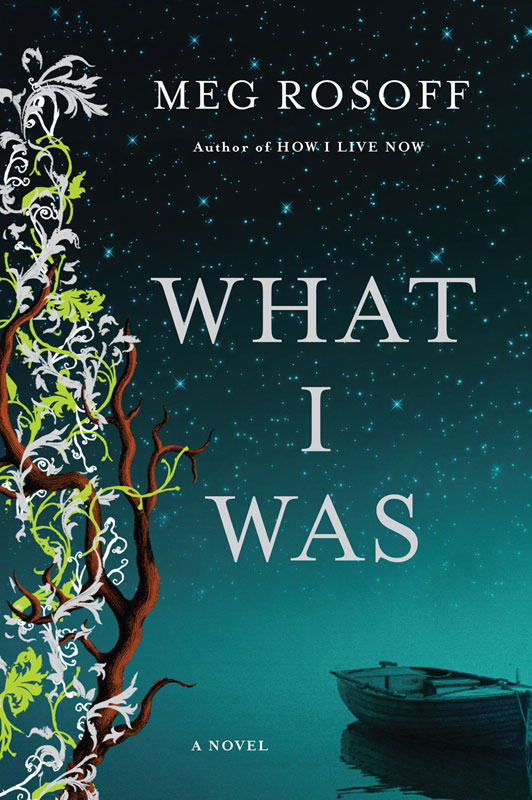
What I Was by Meg Rosoff

As a very old man, Hilary finds that his mind drifts freely throughout his life, without an anchor. He decides to return to the year he was sixteen, the time he first experienced love.
We are drawn back to that year, in 1960s England. He is in a boarding school, an institution that he sees as the last bastion of the crumbling British Empire. :-) Having been kicked out of several boarding schools, Hilary is wise to the system, and his expectations are low. Meg Rosoff created a unique voice; Hillary is bright, edgy, and incredibly witty. He also has few delusions about himself; he doesn't fancy himself as any sort of hero. I was quickly drawn in, and I saw slight shades of Holden Caulfield.
Hilary's parents put him in yet another boarding school, St. Oswald's, which lies on the crumbling coast of St. Anglia. This is a novel in which the setting is actually a full fledged character in the story. The boys at St. Oswald's, who are generally indifferent students, enjoy medieval history because of the nasty descriptions of bloodshed, mutilation, and torture. So Hilary is aware of the multiple layers of history in this little coastal area, right down to the crumbling Roman forts. And the descriptions of the tides, the coast, and the surrounding area are remarkable. It was so vivid, I could see, smell, hear, feel, and even taste it, and at the same time, the description of the setting had a dreamlike quality.
When Hilary meets a solitary, mysterious boy named Finn, living alone in a fishing hut, he is drawn to him, almost to the point of obsession, and he comes to love him. Finn is even more detached from the rest of the world than he is. Hilary longs to win his new friend's approval and affection and to become part of the ebb and flow of his life.
As I read this book, I found myself drifting, unsure how I felt about it. And even now, I find it hard to describe or rate. The writing is gorgeous, the imagery is somewhat mesmerizing, and I love Hilary's voice, especially the dry humor that sometimes made me laugh out loud. On the other hand, I never really connected with the characters. I believe this was deliberate. Both Hilary and Finn were detached from others -- the difficulty I had connecting with them, oddly, kind of defines them. And Hilary was not easy to like. He was indifferent, and at times cruel, to others -- there were scenes that made me cringe. I don't see this as a defect in the novel, but it held me back from actually falling in love with this book. I liked it, admired it, and at times was blown away by it, but I didn't love it.
Another thing I had difficulty with ...
SPOILER WARNING! (highlight to read)
was
the twist near the end of the novel when Finn was revealed to be a
girl. Was there something profound in this discovery? It did turn my
assumptions about Finn's gender -- and about Hilary's sexual orientation
-- on its head. I rather enjoyed the author playing with gender
identity in this way. And Finn's obliviousness to this fact might have
been revealing about his character -- showing his self absorption or his
naivety. I don't know. At the same time I was annoyed; it felt like a
gimmick.
End of SPOILER WARNING
I will be reading more of Meg Rosoff's books; I have a feeling her distinctive style and wit can be addictive. I really loved what Ana at Things Mean a Lot wrote about this novel -- she described the aspects of this story that tugged at my gut better than I could:
What I Was is a beautiful story about love and longing and growing up. And about other things too, like memory and history and our collective blind spots. I think I enjoyed it even more than How I Live Now, and I really loved that book. There was something about the emotions Hilary was experiencing that really spoke to me. It’s a bit unsettling, but I don’t think it’s uncommon for a young person to feel strongly drawn to someone and not being sure if they want them or if they want to be them. And that’s what happens in this book. Finn symbolizes freedom, and a kind of life completely unlike Hilary’s—and for that reason, desirable despite its difficulties.Read More Reviews: Things Mean a Lot; Big A Little A; Bart's Bookshelf
Rating: 4
| 5- Cherished Favorite | 4 - Keep in My Library | 3 - Good Read | 2 - Meh | 1 - Definitely Not For Me |
Labels:
Britain,
Coming of Age,
Gender Issues,
Historical Fiction,
Meg Rosoff
Tuesday, February 28, 2012
A Golden Web by Barbara Quick

Alessandra Giliani has an unusually gifted mind and boundless curiosity about the natural world. Nothing makes her happier than being free to roam the woods around her father's estate, with her brother Nicco, unraveling the secrets of nature. In 14th century Italy, the medieval world is on the cusp of the Renaissance, an era of fertile scientific curiosity. And Alessandra is the daughter of a stationer, a bookmaker, who holds a unique and important role a century before the invention of the printing press. He visits the great libraries of Europe, borrowing books that will be painstakingly copied and treasured for many lifetimes. With access to books, and with Nicco to help her explore the life all around her, Alessandra's brilliance flourishes, and she dreams of studying medicine.
However, narrow societal expectations and superstitions limit her possibilities for the future. As a woman, she must either become a nun or marry to a man her father chooses. And women who show uncanny knowledge and skill are often burned at the stake. Kept confined to her room by her stepmother, who resents her and is determined to protect her virtue until she can arrange a profitable marriage, Alessandra devises a plan to escape and pursue her dream.
Barbara Quick lovingly recreated this character based on an intriguing historical figure about whom very little is known. Alessandra's character is richly developed. I loved experiencing life in 14th century Italy through her eyes, feeling her quick mind, her longing, and her passions. I was also drawn in by the wealth of interesting historical details. We see different paths of knowledge converge: the teachings of ancient Greek thinkers like Aristotle and Galen, the work of Arab scholars, and the traditional wisdom of female healers, and we see Alessandra make an exciting discovery of her own.
This novel also offers fascinating descriptions of how medieval illuminations were created. And there is fodder for interesting discussions of the evolving roles of women during history, and the ways men have maintained intellectual and moral control in society.
Readers will also enjoy the Alessandra's romance, a relationship in which she doesn't relinquish her strength and independence. I wish her love interest, and their relationship, had been developed more fully. When we reached that point, it felt as if there were a rush to get to the story's resolution. And the story's closing -- though it had reached a logical ending point -- felt somewhat abrupt.
Despite these minor disappointments, I thoroughly enjoyed this vibrant historical novel. Alessandra's well developed character -- passionate, curious, brave, and vulnerable -- is what really made it shine. Both adults and teens will enjoy this book, which will especially appeal to teenagers. And the historical and geographic detail in this story is satisfying -- and enough to pique a reader's interest in further reading and discussion -- without weighing down the flow of the story.
About the Cover: It is becoming increasingly rare to find original artwork on book covers. I love seeing the front of a novel illustrated with a gorgeous original painting, and the cover of A Golden Web is beautiful. Visit the author's blog to read more about the cover art, and about the beautiful young woman whose face is behind the painting.
Many thanks to Barbara Quick and to HarperTeen for sending me a copy of this book for review.
Read More Reviews: Rebecca's Book Blog; Book Illuminations; Enchanted by Josephine
Rating: 4
| 5- Cherished Favorite | 4 - Keep in My Library | 3 - Good Read | 2 - Meh | 1 - Definitely Not For Me |
Labels:
Barbara Quick,
Gender Issues,
Historical Fiction,
Italy,
Romance,
YA Fiction
Tuesday, February 14, 2012
The Lost Summer of Louisa May Alcott by Kelly O'Connor McNees

When I was a girl, I was madly in love with Louisa May Alcott's novels, a passion I inherited from my mother. In high school, I learned a bit about American Transcendentalism and Bronson Alcott's eccentric Utopian vision that played out at Fruitlands. I wondered what life was like for young Louisa May Alcott, living with her father's fascinating but impractical ideals, and how Bronson Alcott meshed with the wise, loving father on the fringes of Little Women.
Kelly O'Connor McNees's thoroughly researched, gorgeously crafted novel draws them both together, vividly sketching what life in the Alcott family may have been like. She also imagines a part of Louisa's life, when she was on the cusp of becoming a committed spinster, when she fell in love and dreamed about marriage.
In the summer of 1855, Louisa is 22 and living in Walpole, Massachusetts with her family. She longs for freedom and independence and is eager to pursue her dream of becoming a writer. But she and her beloved older sister Anna are tethered to their need to help care for their family. Anna longs for love and marriage, but Louisa is determined to remain single. Living in a time when a married woman is unlikely to keep her own interests and dreams alive, she is unwilling to forfeit her plan of becoming an author. Furthermore her father fancies himself a writer and philosopher and feels it violates his principles to work for income. Watching the drudgery and poverty of her mother's life intensifies Louisa's determination not to marry.
That summer Louisa meets Joseph, a young man who shares her passion for words and ideas, and they share the newly published, controversial poems of Walt Whitman. Joseph's fate is tied to responsibility to his family and rectifying the mistakes of his improvident father. As the love between him and Louisa deepens, they must both make heart-wrenching choices.
This is such a lovely book; in a dreamlike way, it sucked me into its world as a wonderful novel should, recreating the language and sensibilities of the time in a way that seemed to ring true. It brought together the March family and the Alcotts in a believable way. It was rich with vivid details about quotidian life in a mid-nineteenth century household, and it touched on some of the important ideas and events of the day, including the controversy over slavery and the transcendental movement. It was illuminated by the presence of some of the great writers and thinkers of the time, including Ralph Waldo Emerson and Henry David Thoreau. It also explored interesting themes, including the struggle between personal desires and duty and the conflict between love and personal fulfillment in a time when narrow roles were proscribed for women.
However, I wish the relationship between Louisa and her suitor had been developed in more depth. I felt the connection, a meeting of minds and stirring of desire -- I definitely felt the sense of longing. But I expected it to go deeper. I didn't quite feel a depth of love and commitment that would keep this couple connected, on some level, for the rest of their lives.
Nevertheless, this was a novel I thoroughly enjoyed. I highly recommend it to historical fiction aficionados, particularly those who loved Louisa May Alcott's novels.
Read More Reviews: Life in the Thumb; She is Too Fond of Books; Sophisticated Dorkiness; S. Krishna's Books; The Crowded Leaf
Rating: 4
| 5- Cherished Favorite | 4 - Keep in My Library | 3 - Good Read | 2 - Meh | 1 - Definitely Not For Me |
Thursday, January 5, 2012
A Thread of Sky by Deanna Fei

Irene's three daughters were grown up; the youngest, Sophie, was about the graduate from high school, when her husband Bill walked out, "needing a break." Irene said something when he left, words of bitterness and hurt, which she came to regret when Bill died in a tragic accident. These words drove a wedge between Irene and her daughters. Now, at 55, she finds herself alone, desperate to reconnect with her children.
Daughter of a Taiwanese feminist and revolutionary, who immigrated to America after fleeing civil war, Irene was raised to be an exceptional woman at all costs. Irene became a biologist, immersed in important research that might solve the riddle of Alzheimer's Disease. Yet she was torn between her career and motherhood.
Her mother, Lin Yulan, lives across the country. They are separated by a rift caused by Lin Yulan's expectations of her daughter. Twenty years ago, at age 60, Lin Yulan left her chronically unfaithful husband, and she harbors deep secrets about what she suffered in China.
The legacy of needing to be an exceptional woman, beyond all else, filtered down to Irene's daughters, all high achievers. Nora, now in her late 20s, is a successful financial trader. She overcame a professional subculture of sexism and racism to be respected by her male colleagues. She's in a difficult relationship with her live-in boyfriend, terrified to compromise or commit to him. Kay, in her mid 20s, is living in deplorable conditions in a Chinese dormitory, determined to learn her ancestral language and reclaim her Chinese identity. She drifts among three different men, never settling into a real relationship, and tries to rescue Chinese prostitutes from sexual exploitation. Sophie just graduated from high school. A brilliant student and artist, she has won acceptance to Stanford. She struggles with her relationship with her mother, her attachment to her African American boyfriend, who seems to sincerely love her, and an eating disorder.
On New Year's Eve, Irene reaches out to her sister Susan. A professor and poet who "sees life in moments," focusing on "life crystallized" and ignoring the narrative, the cause and effect, Susan is very different from her sister. Irene plans a trip for herself and her daughters, Susan, and Yu Lin. Ironically they find themselves in their ancestral country on a packaged tour, buying overpriced souvenirs and not understanding the language. There is a great deal of awkwardness, misunderstanding, and frustration among the six women. But in the end, they've achieved something -- not reconciliation, but a bit more acceptance.
Deanna Fei's narrative shifts among six points of view, speaking in the voice of each of these women. Her characters are well drawn, and she does a magnificent job of seeing the world through the eyes of women in three different generations. I was absorbed by the aspirations, fear of intimate commitments, and confusion navigated by gifted, ambitious women in their twenties. I was also captivated by the hopes and losses of midlife and the challenges of old age, when one has a rich history but few people alive who were there with you to bear witness.
This story has many layers. It reflects both the prejudices toward and high expectations of Chinese Americans. In her review, Amy Finnerty of the New York Times, wrote: "It is to Deanna Fei’s credit that she so squarely and honestly takes on a misunderstood ill — the burden of the so-called model minority." It explores Chinese history, including the legacies of the revolution and the tragic holocaust under Japanese occupation. This novel also looks at the complexity of women's issues. Kay is inspired by her grandmother's feminist revolutionary past. She scours personal ads, preparing to rescue Chinese women from exploitation.
"Handsome European male fluent in English and Chinese would like to meet Japanese and Korean girls. NO SPEAK ENGLISH? O.K. I LIKE YOU. WE HAPPY" ... These women couldn't understand how what seemed like romance, or at least mutual attraction, was shameless capitalization; or the historical context of Orientalism; or the subtext of those English ads -- how, for starters, that "Handsome European male" preferred his Asian women inarticulate, if not voiceless; or how such presumptions coiled around people, until they no longer knew how their own identity had been constricted. (pp. 72-73)Then she discovers the sexually "exploited" women she reaches out to don't want to be rescued, and glimpses the reality that this issue is more complex than she had imagined. For these women, paradoxically, prostituting themselves offers an unprecedented kind of freedom.
Similarly, Deanna Wei captures the complexities of both traditional marriage and modern relationships and of the struggle between a woman's career, and her drive to make a mark on the world, and her desire to be in a "safe" intimate relationship and raise children. She respects her readers enough not to suggest easy answers. And the characters she portrays -- both male and female -- are flawed, vulnerable, and vividly real.
Q & A with the Author: Adoption. Et cetera.
Read More Reviews: Largehearted Boy (includes the author's music playlist for this novel); Book Addiction; Daisy's Book Journal
Rating: 4.5
| 5- Cherished Favorite | 4 - Keep in My Library | 3 - Good Read | 2 - Meh | 1 - Definitely Not For Me |
Labels:
China,
Chinese Revolution,
Deanna Fei,
Gender Issues,
Grief,
Historical Fiction,
Motherhood,
World War II
Tuesday, December 27, 2011
Dracula in Love by Karen Essex

Ah … Dracula. The vampire who held his English solicitor, Jonathan Harker, hostage in his Transylvanian castle and preyed on innocent virgins, imbibing their blood. The eerie, unforgettable villain of Bram Stoker’s Victorian classic and a staggering number of film adaptations.
Legends about revenants who drink human blood seem to span across many times and cultures. The Victorian versions of these stories ooze subliminal sexuality. In an era when some respectable folk covered piano legs, so it wouldn’t remind people of the curves of a woman’s legs and provoke untoward thoughts, perhaps it was easier to write about fanged undead preying on virginal girls that it was to discuss actual sex.
These stories glean a lot of power from their deep folkloric roots and from the subliminal sexuality. Today vampire stories have dumped the subliminal aspect — the vamp-sex is right out there. This defuses the tales a bit, but they are still great fun.
"The truth is we must fear monsters less and be warier of our own kind," the narrator says, in the introduction to this novel. Like Dracula, My Love by Syrie James, this novel re-imagines Bram Stoker's famous story, telling it from Mina's point of view. In many ways, it's a darker, edgier story than Dracula, My Love. While there are supernatural elements, the focus is on human evil, particularly the treatment of women in Victorian England.
While Stoker's tale is laden with subliminal sexuality, Dracula in Love makes it overt -- several scenes are hot -- and exposes the ugly fear and repression that women faced, especially when expressing their sexuality. "(Dracula) is often read as a cautionary tale against the unbridling of female sexuality at the end of the nineteenth century," Essex wrote. "In this vein, I wanted to turn the original story inside out and expose its underbelly or its "subconscious mind," by illuminating the cultural fears, as well as the rich brew of myths and lore, that went into Stoker's creation."
In Dracula in Love we see the budding women's movement, with ladies taking to the streets to protest their disenfranchisement. We also see various ways women were controlled, including mistreatment in mental asylums. Unwanted wives, or women who refused to cling to the asexual role society proscribed for them, found themselves institutionalized as "lunatics" and subjected to horrific treatments. This piece of the story reminded me of Fingersmith by Sarah Waters.
Dracula in Love also incorporates an imaginative re-creation of Celtic myths, offering -- among other things -- an interesting contrast between the patriarchal nature of Christendom and female-centered "pagan" religions. This facet of the book reminded me a bit of Avalon by Marion Zimmer Bradley. And English folklore, from ghost stories to miraculous tales, is strewn throughout the book.
Like Dracula, My Love, this novel fills in some of the gaps left in Stoker's story. This makes a more fully fleshed out story, with more richly developed characters -- particularly the women. However, it often weakens the story. Isn't it those shadowy gaps, and the things left unsaid, that lend the tale a creepy sense of mystery? For example, Essex's account of the creation of vampires, including Dracula, was imaginative and unique but didn't appeal to me. And Dracula himself, who was intentionally portrayed as not evil, lacked a lot of his edge.
In Dracula in Love, the male characters were flawed but fundamentally decent. In this novel, Jonathan is irredeemably weak and gormless, and his cohorts are warped and a bit sinister. This makes sense, as this is a very different story, one that focuses on the dark side of history and human nature. Somehow this makes the novel both less compelling, as I didn't feel a connection with the men in the story, and more compelling, as it drew me into a gritty reality.
Overall, this is a well crafted blend of historical fiction and paranormal romance and a good read -- at times it's painful and compelling, and at other times it's delightfully fun. I think it will be quite popular with vampire lovers and historical fiction aficionados who don't mind the raunchy bits.
Read More Reviews: Misfit Salon; Life in the Thumb; Reading With Tequila; Devourer of Books; Books and Movies; Book, Line and Sinker; Patricia's Vampire Notes
Rating: 4
| 5- Cherished Favorite | 4 - Keep in My Library | 3 - Good Read | 2 - Meh | 1 - Definitely Not For Me |
Labels:
Britain,
Gender Issues,
Historical Fiction,
Karen Essex,
Paranormal,
Vampires
Thursday, December 15, 2011
The Birthday of the World and Other Stories by Ursula Le Guin
I have been wanting to delve into some of Ursula Le Guin's writing
for years, and I thought short stories would be a good doorway into her
work. I read seven stories: "Coming of Age in Karhide," "The
Matter of Seggri," "Unchosen Love," "Mountain Ways," "Solitude," "Old
Music and the Slave Women," and "The Birthday of the World." There is also an eighth story in this collection: "Paradises Lost."
In these tales, Le Guin showcases one of the things she is known for, using worlds she's created -- with different beings and customs that, at first glance, seem utterly foreign -- to explore human relationships, society, injustice, sexuality and gender.
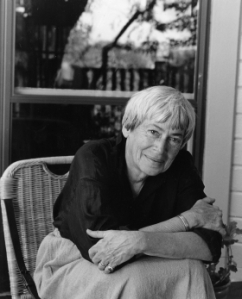
Ursula LeGuin:
LeGuin was raised in Berkley; her father was an anthropologist and her mother was a psychologist and author of children's books. Her parents immersed her in myths and legends from around the world. "My father studied real cultures and I make them up," she once said, "in a way, the same thing."
LeGuin earned a B.A. from Radcliffe College in 1951, and she received her master's degree in romance languages from Columbia University in 1952. She studied on a Fulbright scholarship in France, where she met Charles Le Guin, a historian. They married in 1953 and later settled in Portland, Oregon, where they raised their three children.
According to an article in The Salon:
"Coming of Age in Karhide" -- This story is set in the world Le Guin wrote about in the novel The Left Hand of Darkness. In this world, everyone is both genders, fluctuating back and forth between male and female. Each person has a clitopenis, an anatomical feature which is left to your imagination. Monogamy is strongly discouraged; physical intimacy takes place through sexual group rituals. The few people who have fixed genders are marginalized and called "halfdead" or "pervert."
The narrator remembers when he reached puberty. His city, filled with canals full of kayaks and poleboats, is beautifully drawn with brief but powerful descriptions. The customs guiding coming of age, sex, and procreation are crafted in great detail. This makes it easy to be drawn into this world, getting glimpses of how the community helps children through the transition to adulthood. "We shape each other to be human."
We see the narrator and his friend struggle with their fears of growing up, being shaped by their sexuality, and in the process, losing their identity. And he recalls the experience of puberty in a way that seems both a bit foreign and achingly familiar:
"The Matter of Seggri" -- LeGuin wrote "the germ of this story was in an article I read about the gender imbalance that persistent abortion and infanticide of female fetuses and babies are causing in parts of the world -- our world, Earth -- where only males are considered worth the bother." She turned this on its head, creating a world in which male babies are rarely conceived and carried to term.
Women rule this society. Males enjoy a privileged status and, at the same time have a very marginal role in society. Men are segregated from female society, so adolescent boys are forced to leave their families behind. Throughout their lives, they are limited to playing rough sports and siring children for pay.
The story probed into the ways men are dehumanized and how this mutilates their natures. This world is incredibly rich, and I felt as if various threads of our own culture -- including gender inequities, distorted views of the male need for love and intimacy, and rigid, macho expectations of men -- were being woven together in new and startling ways.
"Unchosen Love" and "Mountain Ways" -- LeGuin has described these stories as "comedies of manners." They explore the complications of romance and marriage in a society with complex rules for marriage. A marriage is among four people, two of each gender (male/female) and two of each moiety (morning/evening). These intricate stories explore social mores, spirituality, love, sex, and overcoming the barriers of cultural differences. They are also about the lengths someone will go to in order to be with a loved one in the face of byzantine social rules and boundaries.
"Solitude" -- Serenity and her brother are raised on a foreign planet by their ethnologist mother. Serenity's mother is never able to fully understand this odd female-centered culture in which men are banished and adult women are separated from one another by rigid boundaries and rules governing privacy. However, Serenity becomes absorbed into this world and comes to love the tribal ways and the solitude it affords.
"The Birthday of the World" -- Ze is God's daughter, and upon the death of one of her parents, she and her younger brother will marry and become God. In this world, which reflects ancient societies like those of the Egyptians and the Incas, gods live among the people, cloaked in many layers of tradition and ritual. This story has a slightly dystopian feel. Ze's people have conquered many other cultures, and they protect and care for the people in these lands. These people are secure and don't know hunger, but this makes them somewhat fragile. They have never had to defend themselves or decide for themselves what to think and believe. And in the end, their gods are just as vulnerable as they are.
Ursula Le Guin's stories are unique, with such literary richness and so many layers of psychological, spiritual, and social ideas that they can't be neatly categorized as science fiction. With a few lines, she can weave images that conjure an entire world. And with just a few sentences, or a paragraph, she can convey tremendous wisdom about human nature, spirituality and society.
Her invented worlds are both beautiful and deeply flawed. They are so well drawn they seem real, and they take us outside our own culture and value system. In the process they help us better understand our own society and explore what it means to be human.
Rating: 4.5
In these tales, Le Guin showcases one of the things she is known for, using worlds she's created -- with different beings and customs that, at first glance, seem utterly foreign -- to explore human relationships, society, injustice, sexuality and gender.

Ursula LeGuin:
LeGuin was raised in Berkley; her father was an anthropologist and her mother was a psychologist and author of children's books. Her parents immersed her in myths and legends from around the world. "My father studied real cultures and I make them up," she once said, "in a way, the same thing."
LeGuin earned a B.A. from Radcliffe College in 1951, and she received her master's degree in romance languages from Columbia University in 1952. She studied on a Fulbright scholarship in France, where she met Charles Le Guin, a historian. They married in 1953 and later settled in Portland, Oregon, where they raised their three children.
According to an article in The Salon:
She was on the leading edge of the civil rights, feminist and antiwar movements of the 1960s. Through her tales and complex characters, she has explored the themes of sexism, racism, nationalism, unchecked technological progress and the flaws in popular utopian visions.Le Guin is the author of more than three dozen books. She was awarded a Newbery Honor for the second volume of The Earthsea Cycle, The Tombs of Atuan. She has won many other distinctions, including the Margaret A. Edwards Award, a National Book Award, and five Nebula Awards.
"Coming of Age in Karhide" -- This story is set in the world Le Guin wrote about in the novel The Left Hand of Darkness. In this world, everyone is both genders, fluctuating back and forth between male and female. Each person has a clitopenis, an anatomical feature which is left to your imagination. Monogamy is strongly discouraged; physical intimacy takes place through sexual group rituals. The few people who have fixed genders are marginalized and called "halfdead" or "pervert."
The narrator remembers when he reached puberty. His city, filled with canals full of kayaks and poleboats, is beautifully drawn with brief but powerful descriptions. The customs guiding coming of age, sex, and procreation are crafted in great detail. This makes it easy to be drawn into this world, getting glimpses of how the community helps children through the transition to adulthood. "We shape each other to be human."
We see the narrator and his friend struggle with their fears of growing up, being shaped by their sexuality, and in the process, losing their identity. And he recalls the experience of puberty in a way that seems both a bit foreign and achingly familiar:
Something I could not locate anywhere, some part of my soul, hurt with a keen, desolate, ceaseless pain. I was afraid of myself: of my tears, my rage, my sickness, my clumsy body. It did not feel like my body, like me. It felt like something else, an ill-fitting garment, a smelly heavy overcoat that belonged to some old person, some dead person. It wasn't mine, it wasn't me. Tiny needles of agony shot through my nipples, hot as fire. When I winced, and held my arms across my chest, I knew that everybody could see what was happening. Anybody could smell me.Le Guin described his sexual awakening, and especially his spiritual awakening, so beautifully that I didn't want the story to end. I was thoroughly drawn into the richness of the world Le Guin created and the way she explored gender and sexuality from different angles. She brings us in like anthropologists, observing how coming of age, relationships, sex, and procreation are handled in a different world. In the process, she has us look at the mores of our own world in a curious, open-minded way.
"The Matter of Seggri" -- LeGuin wrote "the germ of this story was in an article I read about the gender imbalance that persistent abortion and infanticide of female fetuses and babies are causing in parts of the world -- our world, Earth -- where only males are considered worth the bother." She turned this on its head, creating a world in which male babies are rarely conceived and carried to term.
Women rule this society. Males enjoy a privileged status and, at the same time have a very marginal role in society. Men are segregated from female society, so adolescent boys are forced to leave their families behind. Throughout their lives, they are limited to playing rough sports and siring children for pay.
The story probed into the ways men are dehumanized and how this mutilates their natures. This world is incredibly rich, and I felt as if various threads of our own culture -- including gender inequities, distorted views of the male need for love and intimacy, and rigid, macho expectations of men -- were being woven together in new and startling ways.
"Unchosen Love" and "Mountain Ways" -- LeGuin has described these stories as "comedies of manners." They explore the complications of romance and marriage in a society with complex rules for marriage. A marriage is among four people, two of each gender (male/female) and two of each moiety (morning/evening). These intricate stories explore social mores, spirituality, love, sex, and overcoming the barriers of cultural differences. They are also about the lengths someone will go to in order to be with a loved one in the face of byzantine social rules and boundaries.
"Solitude" -- Serenity and her brother are raised on a foreign planet by their ethnologist mother. Serenity's mother is never able to fully understand this odd female-centered culture in which men are banished and adult women are separated from one another by rigid boundaries and rules governing privacy. However, Serenity becomes absorbed into this world and comes to love the tribal ways and the solitude it affords.
It was hard for Mother to understand that some persons truly consider most human relationships unnatural; that marriage, for instance, or government, can be seen as an evil spell woven by sorcerers.One of the things that struck me about this story was how Serenity thrived on living in a culture in which children fill integral roles, doing their share to ensure the survival of the group. They are learning in a way that is not separated from life. After leaving the planet, Serenity is educated in a more artificial way, such as being assigned reports, and she flounders.
Solitude is noncommunication, the absence of others, the presence of a self sufficient to itself.
my first clear memory is of the auntring ... I muddle the mud with my hands, deliciously, till it is thick and smooth. I pick up a big double handful and slap it onto the walls where the sticks are. Mother says, "That's good! That's right!" in our new language, and I realise that this is work, and I am doing it. I am repairing the house. I am making it right, doing it right. I am a competent person. I have never doubted that, so long as I lived there."Old Music and the Slave Women" -- An aging man lives in a society torn apart by war, politics, and slavery. He has worked for freedom for the slaves but has relinquished hope that this will make a difference. An unexpected series of events brings him to the estate of a slave owner, where he survives a horrifying ordeal and enters briefly into the lives of a group of slave women.
"The Birthday of the World" -- Ze is God's daughter, and upon the death of one of her parents, she and her younger brother will marry and become God. In this world, which reflects ancient societies like those of the Egyptians and the Incas, gods live among the people, cloaked in many layers of tradition and ritual. This story has a slightly dystopian feel. Ze's people have conquered many other cultures, and they protect and care for the people in these lands. These people are secure and don't know hunger, but this makes them somewhat fragile. They have never had to defend themselves or decide for themselves what to think and believe. And in the end, their gods are just as vulnerable as they are.
Ursula Le Guin's stories are unique, with such literary richness and so many layers of psychological, spiritual, and social ideas that they can't be neatly categorized as science fiction. With a few lines, she can weave images that conjure an entire world. And with just a few sentences, or a paragraph, she can convey tremendous wisdom about human nature, spirituality and society.
Her invented worlds are both beautiful and deeply flawed. They are so well drawn they seem real, and they take us outside our own culture and value system. In the process they help us better understand our own society and explore what it means to be human.
Rating: 4.5
| 5- Cherished Favorite | 4 - Keep in My Library | 3 - Good Read | 2 - Meh | 1 - Definitely Not For Me |
Saturday, November 19, 2011
The Last Queen by C.W. Gortner
The Last Queen opens in 1492, a "Year of Miracles." A Portuguese explorer claims to have found a "New World" after landing on a mosquito-infested island, and Catholic monarchs Ferdinand and Isabella have achieved the "reconquest" of Spain from the Moors. Juana of Castile, the second daughter of Ferdinand and Isabella, grows up in the midst of holy wars between Catholics and Muslims. We see makeshift tents and smoldering embers on the battlefield, glimpse catapults and flaming rocks hurled at castle walls, and feel cinder dust in our faces as this novel pulls us in.
Juana grows from an intelligent, spirited girl, filled with wonder about the world around her, into a beautiful young woman. Like her sisters, she has been reared to make a politically advantageous match. As soon as she is of age, she is wed to Philip of Flanders. Known as "Philip the Fair" for his good looks, he wins her heart, and her passion for him continues even as his egotistical, petty, ambitious nature begins to infect her life.
This portrait of Joanna was done in Flanders, ca 1500: it is a detail from the wings of the Last Judgment Triptych of Zierikzee, by the Master of Afflighem (Royal Museums of Fine Arts of Belgium) (Source: Wikipedia)
Gortner did an amazing job of animating this character and making me care intensely about her. I felt Juana's love and loyalty, passion, misplaced trust, rage, and terror. He ingeniously draws us into her mind and emotions, revealing infamous episodes from her life from a different angle so we understand her actions. He also touches on a important facet of history that we don't get from textbooks, the misrepresentation of women as emotionally unstable, hysterical, and even insane to rob them of their power.
This is a beautifully woven story with a wealth of historical detail, compelling characters, and vibrant descriptive writing. The author took me through the landscape of early Renaissance Europe with rich, colorful descriptive detail without slowing down the pace of the novel. It is suspenseful and moving, even heart-wrenching. I read this 360+ page book practically in one sitting, staying up until the wee hours of the morning. I just didn't want to put it down!
C.W. Gortner is an author I will be watching closely, and I can't wait to read Confessions of Catherine de Medici, which will be published in a few months, and The Princess Isabella and The Secret Lion, which are works in progress.
Read More Reviews: Historical Tapestry; Books, Just Books; Hist-Fic Chick; The Burton Review; Confessions and Ramblings of a Muse in the Fog
Rating: 4.5
| 5- Cherished Favorite | 4 - Keep in My Library | 3 - Good Read | 2 - Meh | 1 - Definitely Not For Me |
Labels:
C.W. Gortner,
Gender Issues,
Historical Fiction,
Spain
Subscribe to:
Comments (Atom)